For many adults, fastening a button, zipping a jacket, or tying a pair of shoes feels automatic. We perform these tasks every day without giving them much thought. For some children, however, these everyday activities can feel incredibly challenging.
You may notice that your child avoids buttons, asks for help with zippers, struggles to tie their shoes, or becomes frustrated during everyday dressing routines. While it can be easy to assume a child simply needs more practice, these challenges are often connected to underlying fine motor skills that are still developing.
What Are Fine Motor Skills?
Fine motor skills are movement skills that specifically involve using the smaller muscles in the body, like the hands and fingers. These skills help us complete everyday tasks that require precision, coordination, and control. Children use fine motor skills throughout the day when they:
- Fasten buttons
- Zip jackets
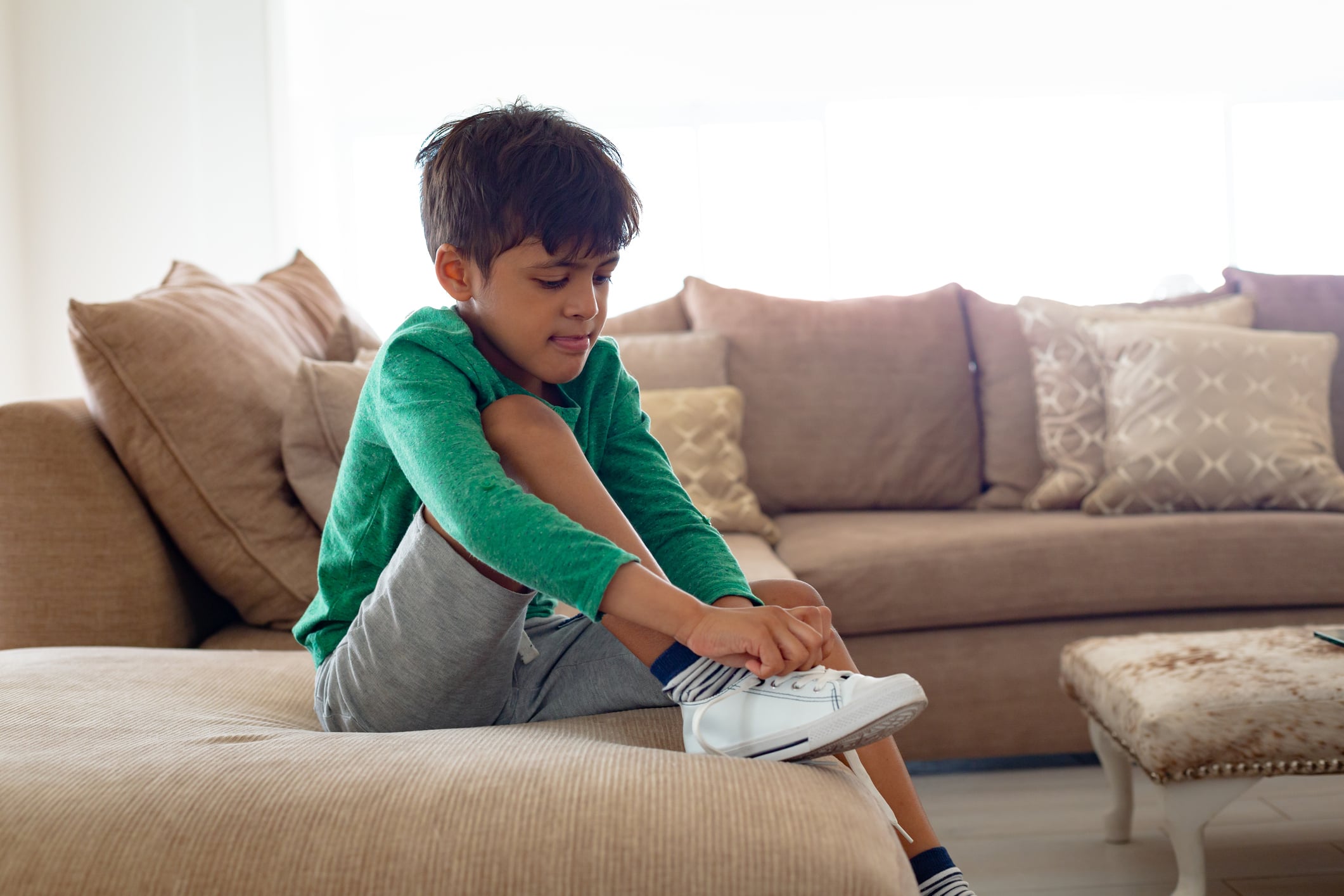
- Tie shoelaces
- Use scissors
- Hold pencils and crayons
- Open containers
- Feed themselves with utensils
Why Dressing Skills Can Be So Challenging
Tasks like buttoning a shirt or tying a shoe require much more than finger strength. Children need to coordinate both hands together while manipulating small objects. They must understand the sequence of steps involved, maintain attention to the task, and make precise movements at the same time.
For example, tying shoelaces requires a child to remember multiple steps, coordinate both hands, manage the tension of the laces, and complete the sequence in the correct order. If any of these skills are difficult, the entire task can become frustrating.
This is why some children seem capable of completing parts of the task but still struggle to perform the whole activity independently.
Hand Strength and Endurance Matter
Some children have difficulty with dressing skills because the muscles in their hands are still developing. You may notice that your child tires quickly during activities that require hand use or avoids tasks that seem physically challenging.
When hand strength is limited, children may struggle to grasp small objects, pull zippers, manipulate buttons, or maintain the finger control needed for more precise tasks. Building strength and endurance can often make everyday activities feel easier and less frustrating.
Coordination Plays an Important Role
Coordination is another important piece of fine motor development.
Many dressing tasks require both hands to work together while performing different movements at the same time. For example, one hand may need to hold a piece of fabric steady while the other hand manipulates a button or zipper.
Children who struggle with coordination may understand exactly what they need to do but have difficulty getting their hands to work together efficiently. As a result, tasks may take longer, require more effort, or lead to frustration.
Frustration Can Affect Confidence
When children repeatedly struggle with tasks that seem easy for their peers, they may begin to avoid those activities altogether. A child who becomes frustrated every time they try to button a shirt or tie their shoes may stop wanting to practice. Over time, this can affect confidence and independence.
It is important to remember that these challenges are not usually caused by laziness or a lack of effort. Most children want to be independent. They may simply need support developing the skills required for success.
How Occupational Therapy Can Help
Occupational therapy helps children develop the fine motor skills needed for everyday activities.
At JLD Therapy, we look at the underlying skills that may be affecting your child’s ability to complete tasks independently. Our goal is to help children build confidence, gain independence, and develop the skills they need for everyday life.
If your child becomes frustrated with buttons, zippers, shoelaces, or other fine motor tasks, an occupational therapy evaluation can help identify what may be contributing to those challenges and determine how we can help.