
Before children can build towers, play pretend, or join a group game, they first need to explore the world with their senses and their bodies. This is called sensory motor play, and it forms the foundation for all play and learning.
I’m Ilana, a physical therapist at Joy & Laughter Developmental Therapy. In this article, I’ll explain what sensory motor play is, why it matters, and how it sets children up for success in more advanced activities.
What Is Sensory Motor Play?
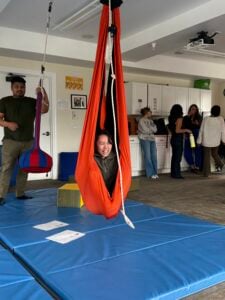
Sensory motor play combines movement with sensory input. It includes activities like rolling on the floor, painting with hands, rocking on a therapy ball, swinging, throwing, or pushing toy cars. These activities may look simple, but they are powerful because they help children understand where their bodies are in space, how to coordinate movement, and how different sensations feel.
For example:
- Swinging teaches children that pumping their legs makes them go higher, building cause-and-effect learning.
- Running on the beach combines the motor activity of running with the sensory input of sand underfoot and sun on the skin.
- Banging a cup on the floor lets children feel vibrations in their hands and hear the sound at the same time.
Each of these experiences strengthens the connection between body movement and sensory input.
Why Sensory Motor Play Matters
Every child responds to sensory input differently. Some children are very sensitive and need a gradual introduction to new textures and sensations. Others crave extra input and need a lot of activity before they feel ready to move on. Both are normal.
Spending time in sensory motor play allows children to build tolerance, regulation, and awareness at their own pace. Even if a child seems to stay in this stage longer than their peers, it is not a setback. It is their body’s way of learning what it needs.
Most importantly, sensory motor play is the foundation for more complex activities. Later, when children play rule-based games or team sports, they have to integrate multiple types of input such as visual, auditory, and tactile while moving their bodies with purpose.
For example, in soccer, a child must notice teammates’ jersey colors, feel the grass under their feet, and listen for the coach’s instructions while controlling the ball. These advanced skills are possible only because of the groundwork laid in sensory motor play.
How Sensory Motor Play Builds Learning Skills
Through sensory motor experiences, children learn:
- Cause and effect: Banging a toy shows them that their action produces sound and vibration. Later, this helps them understand how their actions affect shared play, such as setting down a board game piece gently so the tower does not fall.
- Integration of senses: In art class, a child has to notice colors, tolerate textures of thick or thin paint, listen to the teacher, and control their brush movements. Sensory motor play prepares them to coordinate all of these inputs.
- Body awareness and regulation: Activities like swinging, rocking, and rolling help children learn how to calm down, focus, or get energized so they can participate fully in later tasks.
In this way, sensory motor play is like putting the pieces on the game board before the real game begins. It sets the stage for higher-level play, learning, and social interaction.
Reach Out to JLD Therapy
If you have concerns about your child’s development or wonder whether they are ready to move beyond sensory motor play, Joy & Laughter Developmental Therapy can help.
Call us today at (408) 337-2727 or reach out online to schedule a consultation.